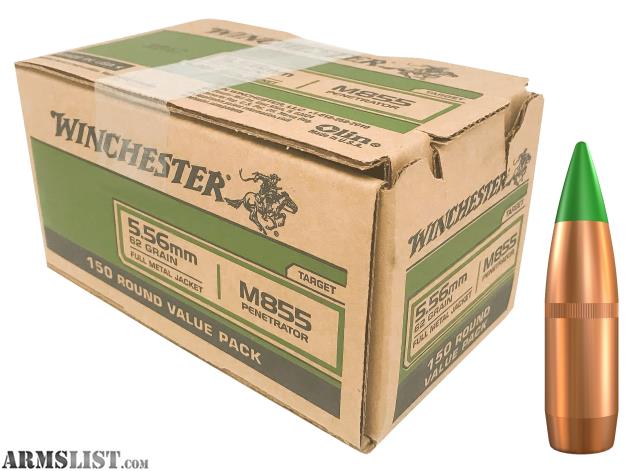
Green Tips 556 Ammo
Pros & cons
What works
- Heavier 62-grain bullet than standard 55-grain FMJ, with better barrier penetration
- Widely available and produced by multiple major manufacturers to the same general spec
- Reasonable choice for practice volume shooting in 5.56/.223 rifles
Trade-offs
- Restricted or banned at some indoor ranges due to the steel penetrator
- Needs a longer barrel to reach its designed velocity and terminal performance
- Manufacturer and exact round count for this listing should be confirmed before ordering
Specs at a glance
About this product
"Green tip" is the common nickname for M855-pattern 5.56x45mm ammunition, named for the green paint applied to the bullet's tip to identify it on a battlefield or at a range table. This listing covers that general ammunition type — a 62-grain bullet built around a lead core topped with a hardened steel penetrator — for shooters running AR-15s and other rifles chambered in 5.56 NATO or .223 Remington.
What actually makes green tip ammunition different from standard FMJ?
Standard 55-grain .223/5.56 ball ammunition uses a plain lead core under a copper jacket. M855 green tip swaps in a heavier 62-grain bullet with a small steel penetrator tip — roughly 7 grains of the bullet's total weight — seated in front of the lead core. That penetrator was originally specified so NATO forces could reliably defeat steel helmets and light barriers at extended range out of a squad automatic weapon. It's worth being precise about what that means in practice: the steel tip helps the bullet punch through glass, thin sheet metal, and heavy clothing more effectively than plain lead-core ball ammo, but M855 is not classified as armor-piercing ammunition, since true AP rounds use an all-steel or tungsten core rather than a partial penetrator over a lead core.
Does the steel core cause any range restrictions?
Some indoor ranges and steel-target bays restrict or ban green tip ammunition specifically because the steel penetrator can spark on steel targets and cause more frame/baffle wear than plain lead-core ammunition. It's worth checking your specific range's ammunition policy before showing up with a case of green tip, since this is one of the more commonly restricted ammo types at ranges that otherwise allow standard ball ammunition.
How does barrel length affect this round's performance?
M855 was designed around longer barrel lengths than many modern AR-15 pistols and short-barreled rifles run today, and independent testing has shown the round needs several inches of barrel to reach the velocity where its terminal performance (fragmentation and tumbling) works as intended. Out of a short-barreled AR, expect reduced velocity and correspondingly different terminal behavior compared to a full 16- or 20-inch barrel — a consideration for anyone choosing this load specifically for a defensive or hunting role rather than range use.
What should I know about this specific listing before ordering?
Because this listing doesn't specify a manufacturer, headstamp, or exact round count, buyers who need a particular brand (Winchester, IMI/Israeli Military Industries, PMC, and others all produce M855-spec loadings) or a specific bulk case quantity should confirm those details with our team before ordering. Green tip loadings from different manufacturers can vary slightly in velocity and accuracy even though they meet the same general M855 specification, so if you're chasing precision rather than volume shooting, it's worth asking which manufacturer's lot this listing represents.
Is green tip a good choice for a home-defense rifle?
Most defensive rifle owners actually lean toward a different bullet design for home defense — a rapidly fragmenting or expanding round tends to reduce overpenetration risk through interior walls compared to a hard steel-tipped penetrator built to punch through barriers. Green tip's whole design purpose is defeating cover and light armor at distance, which is a genuinely different job than a round meant to stop quickly inside a home. Many owners keep green tip on hand for volume practice and use a dedicated defensive round for a bedside rifle, rather than treating the two roles as interchangeable.
As ammunition rather than a firearm, this ships directly to the address on your order, subject to normal carrier and state rules governing ammunition shipments.
Key attributes
| Caliber | 5.56x45mm NATO (also chambers in .223 Remington rifles) |
| Bullet Weight | 62 grains |
| Bullet Type | FMJ with steel penetrator tip (M855 spec) |
Frequently asked questions
- What does "green tip" mean?
- It refers to the green paint on the tip of M855-pattern 5.56 bullets, which have a steel penetrator seated in front of the lead core, distinguishing them from standard FMJ ball ammunition.
- Is green tip ammo armor-piercing?
- No. M855 has a partial steel penetrator over a lead core, which helps it defeat light barriers, but it doesn't meet the definition of true armor-piercing ammunition, which uses an all-steel or tungsten core.
- Can I shoot this at any indoor range?
- Not always. Some ranges restrict or ban steel-core ammunition like M855 because of sparking and increased wear on steel targets and baffles — check your range's policy first.
- Does barrel length matter for this round?
- Yes. M855 needs a longer barrel to reach the velocity where its designed terminal performance works properly; short-barreled rifles will see reduced velocity and different terminal behavior.
- What brand/manufacturer is this listing?
- This listing doesn't specify a manufacturer or exact round count — confirm those details with our team before ordering if brand or quantity matters for your use.